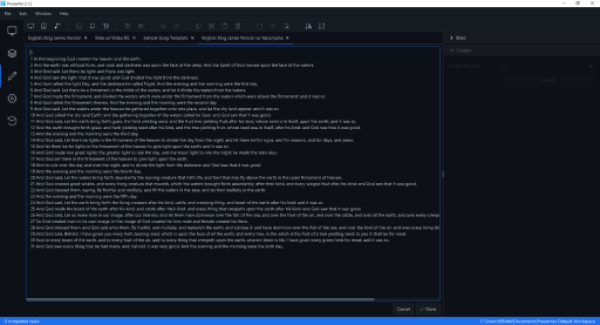
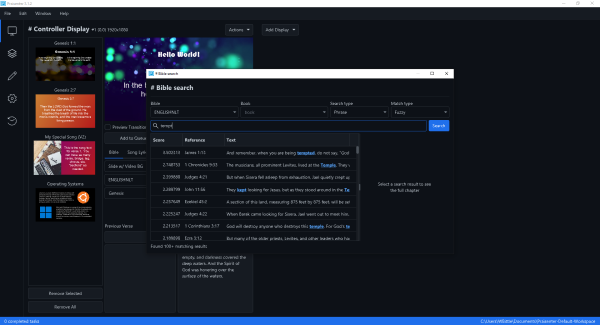
Control
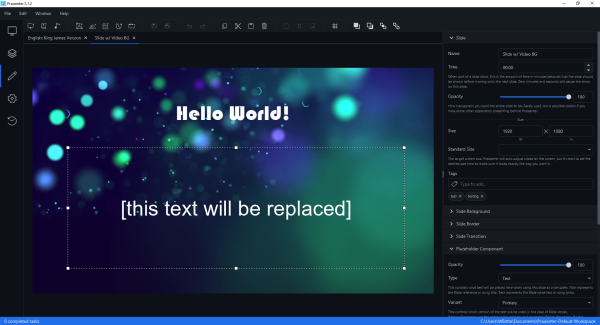
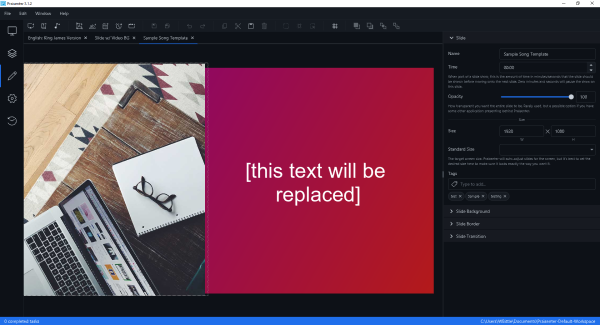
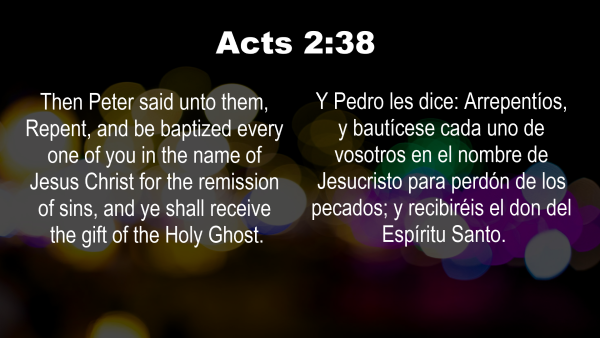
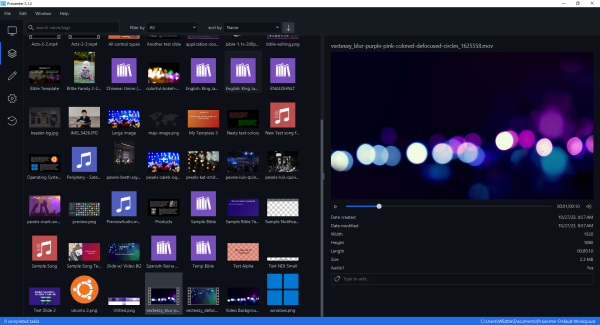
Display unique content on each display
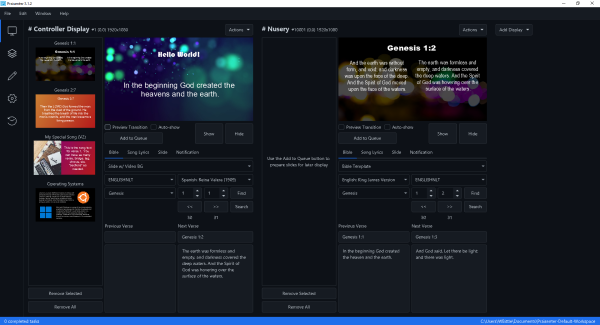
Praisenter allows you to send content to each display independently. The number of displays is dependent on the number of video outputs your system supports.
Praisenter
Specialized presentation software tailored for churches, enabling seamless and engaging presentations for worship services and sermons
Feature rich
Praisenter is packed with features that make presenting content easy and manageable.
Open source
Praisenter is an open source project built by others that share your passion. This means that you can directly contribute to make Praisenter better.
Free
100% free for any use. No registration or sign-up. No trial period or limited feature set. Just download and enjoy!
The Boundary Line
: Focuses on the well-being of animals while they are under human control. It accepts that humans use animals for food, research, or companionship but mandates that they be treated humanely and protected from "unnecessary" suffering.
Challenging the legal status of animals as property so they can have standing in court.
Choosing to "adopt, don't shop" for companion animals. Conclusion
Access to fresh water and a diet that maintains health.
Welfare advocates operate within the system. A dairy farmer practicing high welfare might provide pasture access, pain relief for dehorning, and spacious barns. A welfare-focused research lab might use enriched cages with toys for primates. The goal is to reduce suffering while acknowledging that the animal’s life ends in service to humans.
Praisenter is available on the Windows, Snap, and macOS app stores. Using the app store is the safest way to ensure you get an official version of Praisenter. Praisenter can also be downloaded from the project site under the Releases section, but these builds require more steps to install properly. If you need help with manual install steps, see this article. Praisenter is open source, so if none of the options above work for you, you can always try building Praisenter yourself by cloning the GitHub repo.
Windows 10 x64 or higher

Ubuntu 22.04 x64 or higher

macOS Catalina (10.15) or higher
The Boundary Line
: Focuses on the well-being of animals while they are under human control. It accepts that humans use animals for food, research, or companionship but mandates that they be treated humanely and protected from "unnecessary" suffering.
Challenging the legal status of animals as property so they can have standing in court.
Choosing to "adopt, don't shop" for companion animals. Conclusion
Access to fresh water and a diet that maintains health.
Welfare advocates operate within the system. A dairy farmer practicing high welfare might provide pasture access, pain relief for dehorning, and spacious barns. A welfare-focused research lab might use enriched cages with toys for primates. The goal is to reduce suffering while acknowledging that the animal’s life ends in service to humans.